
UALink 2.0 的 Collective 執行邊界:交換器開始管理計算狀態
UALink 2.0 把部分 collective 計算移入 fabric,使 scale-up switch 開始承擔運算狀態與完成語意。這個變化可能減少重複搬移,也會讓 datatype、ordering、failure isolation 與管理能力進入交換器的設計範圍。UALink 2.0 官方發布
多個加速器共同訓練或執行模型時,需要交換、彙整與同步資料。Endpoint-only reduction 讓資料沿網路抵達加速器,再經運算與下一輪傳送;當多份輸入最終要合成較少的輸出,部分工作可以移到網路內完成。收益取決於 collective 的形狀、資料型別、拓樸與可用運算資源,不能只由 lane rate 推估。
這題的重要性在於系統邊界改變:fabric 從傳送資料,延伸到參與一個分散式運算。以下先分析頻寬與 element rate,再追到浮點結果、operation state、安全及恢復。標準是否有長期架構價值,要看這些語意能否在獨立元件之間組合,形成 runtime 可以信任的契約。
先比較圖中的資料跨越同一個 cut 時發生什麼事:由 endpoint 彙整,與先在網路內合併部分輸入,對跨界資料量的要求不同。圖只呈現這個條件式收益;它也留下下一個問題:交換器開始保有運算狀態後,誰能確認 collective 已經完成?
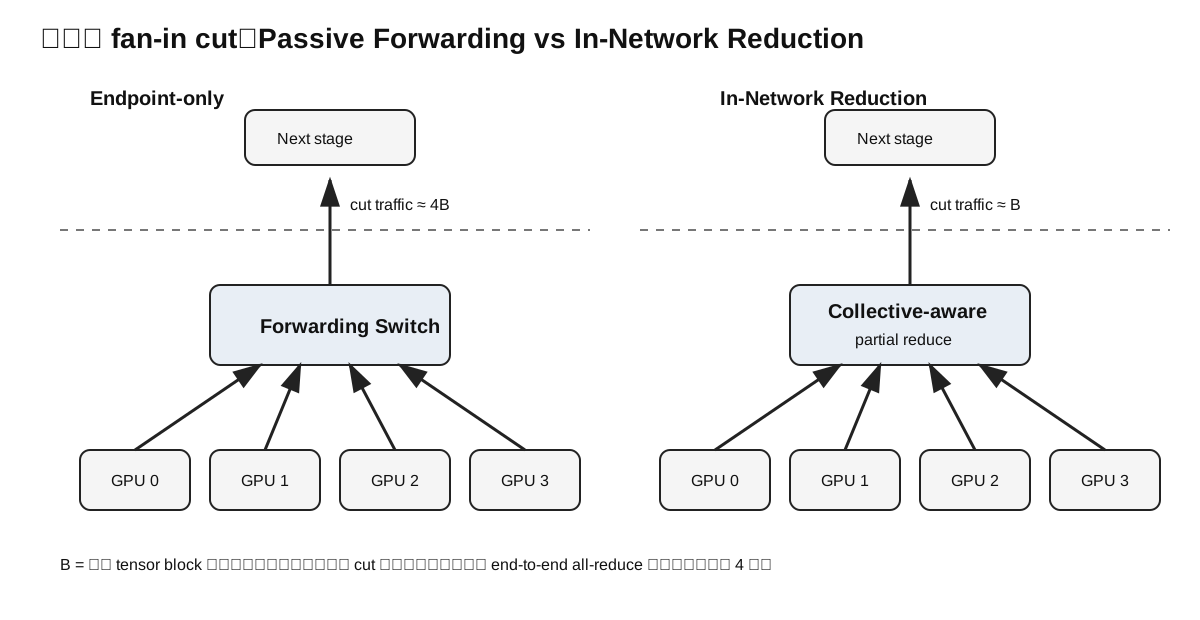
圖:作者整理;資料來源:UALink — Exploring In-Network Compute、Synopsys — Four Ways UALink 2.0 Advances AI Scale Up
200G/lane 解決的是 link rate,但 collective 的問題是重複搬資料
UALink 1.0 已經不是一條慢的 interconnect。官方 white paper 定義最高 200 GT/s data rate per lane,實際 signaling rate 212.5 GT/s,用來吸收 Ethernet Layer 1 的 FEC 與 encoding overhead;四條 lane 組成一個 Station,可提供 800 Gbps TX 與 800 Gbps RX。目標 scale 是最多 1,024 個 accelerator,request-response RTT 目標低於 1 µs。UALink 200G 1.0 White Paper
所以 UALink 2.0 加入 In-Network Compute,原因在於 collective 的成本不能只用 bytes / link_rate 計算;1.0 的 bandwidth 本身並不慢。
以 data parallel training 的 gradient all-reduce 為例,每顆 accelerator 都持有一份 partial gradient。傳統做法由 communication library 把 collective 拆成 point-to-point transfers,endpoint 需要收資料、做 reduction,再把 partial result 往下一段送。即使每條 lane 再快一倍,資料仍然會在多個 endpoint 與 fabric cut 之間重複經過。
最簡單的模型,是看一個 fan-in 為 k 的 switch cut。假設每個 endpoint 都有同一個 tensor block,大小為 B bytes:
passive forwarding traffic across uplink ≈ k × B
如果 switch 能在本地把 k 份相同 position 的 block 先做 partial reduction,則跨越上行 cut 的資料可以近似變成:
in-network reduced traffic across uplink ≈ B
這不代表整個 all-reduce 流量會直接變成原來的 1/k。最後的結果仍要向下 dissemination,而且實際 collective 會 chunk、pipeline、striping,甚至跨多 plane。但在會聚 cut 上,能不能先 combine 再送,會直接決定 fabric 內部是否需要為大量重複 intermediate data 付出 bandwidth。
這也是 UALink 官方在介紹 In-Network Compute 時反覆強調的重點:reduction、aggregation、synchronization、collective primitive、部分 data transformation 與 scheduling optimization,都可以在資料「in flight」時進行,不必等資料抵達 endpoint 後才開始處理。UALink In-Network Compute 技術說明
Collective-aware switch 必須維護的執行狀態
如果只從 hardware block diagram 看,In-Network Compute 很容易被誤解成「在 switch 裡塞幾個 adder」。那不是難點。
難點在於:switch 必須知道這一批資料屬於哪個 collective、哪一個 virtual pod、哪個 tensor block、什麼 datatype、什麼 operation,以及什麼時候可以宣告完成。
Synopsys 對 UALink 2.0 的技術說明提到,specification 定義了 collective primitives 與 block collectives,涵蓋 operation establishment、data flow 與 completion tracking;switch 只保存執行 collective 所需的最小狀態。Synopsys 技術說明
這個「最小狀態」是關鍵。state 太少,switch 無法知道來自不同 source 的 block 是否可以 combine,也無法可靠追蹤 completion;state 太多,switch SRAM、lookup、scheduler 與 recovery complexity 會迅速膨脹。
一個實際 collective-aware switch 至少要面對幾種 state dimension:
- collective/group identity:這批資料屬於哪一組 participant;
- operation:sum、max、min、broadcast 或其他 primitive;
- datatype:FP32、FP16、BF16、integer,甚至不同 block format;
- sequence/chunk identity:哪個 tensor slice 正在處理;
- arrival bitmap 或等價狀態:還缺哪些 participant;
- destination/distribution rule:結果送去哪裡;
- completion/error state:何時可以 safe completion,何時必須 abort。
這裡的設計壓力不像一般 packet switch。傳統 switch 的核心工作是 lookup、queue、schedule、forward;collective-aware switch 則多了一個「資料語意相同才能合併」的條件。它不能因為兩個 packet 都要走同一個 output port,就任意把 payload 做加法。
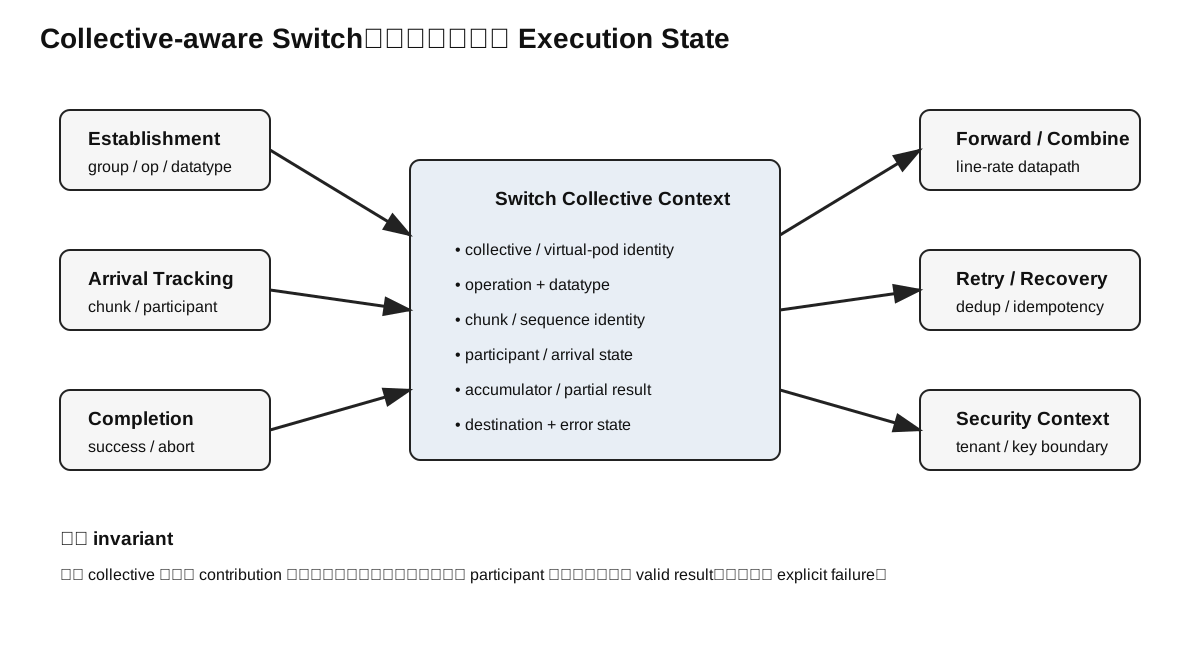
圖:作者整理;資料來源:Synopsys — UALink 2.0 Collectives、UALink Common 2.0
Reduction datapath 的 element rate 與 throughput 上限
In-Network Compute 會帶來另一個容易被忽略的 bottleneck:switch arithmetic throughput。
假設一個 switch 的 aggregate payload arrival rate 是 R bit/s,而 reduction datatype width 是 w bits。若每個到達元素都需要至少一次 combine,則 reduction datapath 的最低 element rate 大約是:
combine_rate ≈ R / w
例如只做一個量級估算:若某個 fabric slice 實際承接 51.2 Tb/s payload,datatype 是 16-bit,那就是約 3.2 trillion elements/s 的 arrival rate。這個數字不代表某顆 UALink switch 公開規格就是 51.2 Tb/s,也不代表每個 bit 都會進 reduction engine;它顯示的是:network compute 要做到 line-rate,ALU、accumulator、SRAM banking、crossbar 與 scheduler 必須一起按 network throughput 設計。
這和 GPU 裡的 tensor core 完全不同。switch 不需要做複雜 matrix multiply,但它的 arithmetic 必須極度 predictable,不能讓某一種 collective 把 forwarding pipeline 卡死。
因此比較兩個 in-network collective design 時,「支援幾種 operation」參考價值有限,應先看下面幾個數字:
- 每個 port、每個 switch 的 sustained reduction throughput;
- 可同時存在多少 collective context;
- 每個 context 支援多少 participant / tensor block;
- small-message setup latency 與 large-message steady-state bandwidth;
- collective traffic 與普通 load/store traffic 同時存在時,是否互相 starvation;
- failure/retry 發生後,context 是否能局部恢復,而不是整個 pod reset。
目前公開的 UALink 2.0 資料足以確認 architecture direction,但沒有公開足夠的 commercial silicon benchmark,可以回答上述問題。這個界線必須保留。
floating point reduction 讓「結果相同」比「封包送到」困難
network engineer 很容易把 correctness 想成 packet correctness:CRC 正確、ordering 正確、沒有 duplicate,事情就結束。但 reduction 進入 switch 之後,數值語意也變成 fabric contract。
浮點加法不是 associative:
(a + b) + c ≠ a + (b + c)
原因是每一次 addition 都可能 rounding。當 collective topology 改變,reduction tree 的 combine order 也可能改變,最後 bitwise result 便可能和 endpoint-only algorithm 不同。
這不一定是錯。大多數 AI training 可以接受合理範圍內的 floating-point nondeterminism;問題在於 software stack 必須知道自己接受的是什麼 contract。
還有更多 corner cases:
- NaN 如何 propagate;
- overflow / underflow 如何處理;
- FP16/BF16 是否用較寬 accumulator;
- mixed precision 是否允許;
- 某一個 participant timeout 時,已經形成的 partial sum 怎麼處理;
- retry packet 是否可能被重複 reduce;
- multi-path reroute 後如何避免 duplicate contribution。
最後一點特別重要。一般 reliable transport 遇到 timeout 可以 retransmit;但如果 switch 已經把某個 packet 的 payload 納入 accumulator,再收到 retry copy,就不能再加一次。因此 reliability state 與 collective state 必須有一致的 idempotency / deduplication 邊界。
所以「switch 裡多幾個 ALU」這個抽象並不夠用:fabric 要開始對 computation correctness 負責。
security 邊界也被一起往 switch 推
UALink 2.0 的 collective-aware fabric 還有一個直接後果:switch 進入 trusted computing base。
UALink 1.0 已經有 end-to-end encryption / authentication 的設計方向;2.0 進一步面對 multi-tenant、virtual pod 與 collective offload。Synopsys 的說明指出,UALink 2.0 對 virtual pod 提供各自的 security context、keying / rotation,collective traffic 若需要 switch 處理,switch 必須在被允許的 trust boundary 內解密、計算,再重新保護資料。Synopsys — Security in UALink 2.0
這裡存在很現實的 architecture trade-off。
如果 switch 永遠看不到 plaintext,in-network reduction 很難做;如果 switch 可以看到 tenant tensor,switch 的 firmware、key management、attestation、debug interface 與 telemetry 都變成 security surface。
所以未來 hyperscaler 除了「有沒有 encryption」,還會問:
- collective engine 是否和 forwarding path 有明確 privilege boundary;
- 不同 virtual pod 的 state 是否硬體隔離;
- crash dump / telemetry 會不會洩漏 payload 或 key-related state;
- switch reset 後 collective context 與 key context 如何同步恢復;
- firmware upgrade 能否不破壞 tenant trust chain。
In-Network Compute 帶來的 latency benefit,最後必須和更大的 TCB 一起算。
UALink 2.0 把 protocol、PHY、chiplet、management 拆成獨立規格
這次 specification suite 另一個設計選擇,是 UALink Consortium 把 Common 2.0、200G DL/PL 2.0、Manageability 1.0、Chiplet 1.0 分離。UALink specification suite
這個拆分讓各層的 evolution cadence 可以分開,作用超出文件整理。
PHY / SerDes 會跟著 200G、400G、optical I/O 的進度快速演進;collective semantics、security model 與 pod control plane 不應該每次換 PHY 就全部重寫。相反地,collective operation 也可以新增,而不必等下一代 electrical signaling。
Chiplet 端則和 UCIe 3.0 對齊。UALink Chiplet specification 定義 interface、form factor、flow control 與 management,官方說明其與 UCIe 3.0 完整相容。UCIe 3.0目前已支援 48/64 GT/s、extended sideband、runtime recalibration 與更完整的 manageability。這讓 accelerator vendor 可以把 UALink controller / PHY / security block 視為一個可整合的 I/O subsystem,而不是每顆 accelerator 都重新發明 die-to-die glue。
Manageability 也同樣被獨立出來。UALink Manageability 1.0 採 gNMI、YANG、SAI、Redfish 等既有管理介面,表示 rack-scale scale-up fabric 開始被當成「需要 topology discovery、partition、health、lifecycle control 的系統」,管理需求超出板子上的高速連線。UALink 2.0 官方發布
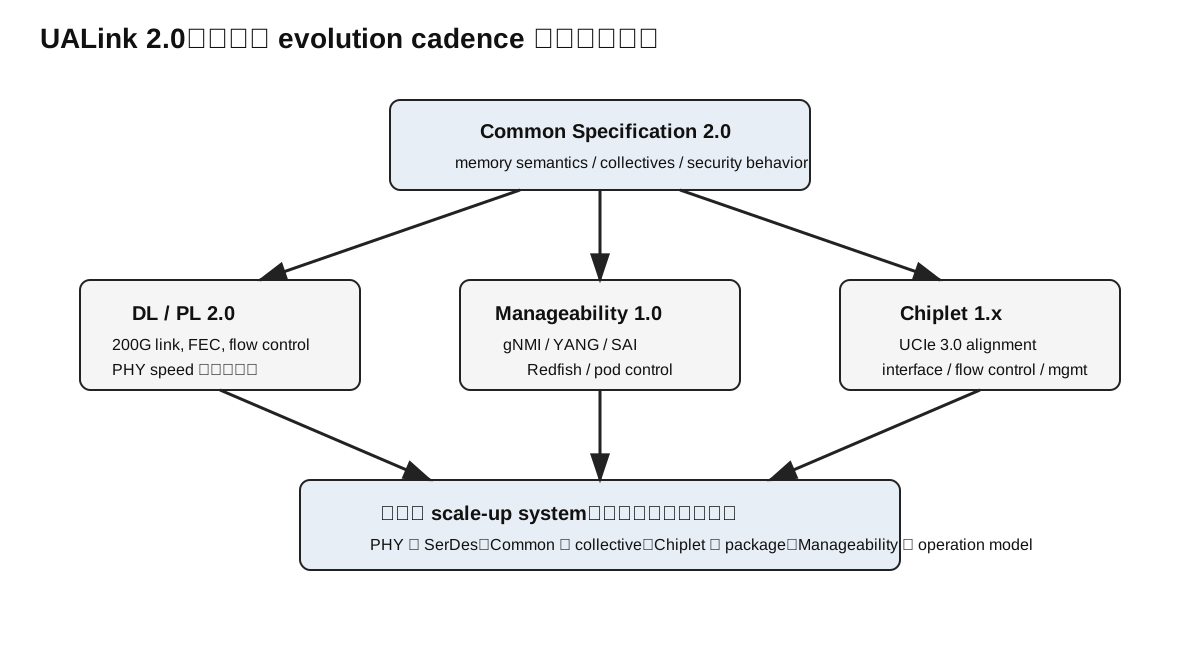
圖:作者整理;資料來源:UALink Specifications、UCIe 3.0 Specifications
Helios 證明 hardware ecosystem 正在形成,但還不能證明 UALink 2.0 collective 的實際效能
2026 年讓 UALink 從 specification 走向 system reality 的關鍵,是 AMD Helios。
AMD 公開的 Helios rackscale design 有 72 顆 MI455X GPU,使用 UALink over Ethernet(UALoE)做 scale-up,官方規格列出最高 260 TB/s aggregate scale-up bandwidth;scale-out 則使用 Pensando Ethernet。AMD 也公開四個 scale-up cartridge,並描述每個 switch tray 的 UALoE switching silicon。AMD Helios 官方規格
另外 AMD 與 Celestica 在 2026 年 3 月宣布合作開發 Helios scale-up switch,並預計 2026 年底開始交付。AMD / Celestica 公告
這些資料證明了三件事:
UALink/UALoE 已經走出 consortium slide,實際 rack、switch、GPU、manufacturing ecosystem 正在落地。
200G-class scale-up fabric 已經被設計進 72-GPU rack,沒有停留在小型 demo。
open scale-up fabric 會和 scale-out Ethernet 並存,不會互相取代。
但目前公開資料不能直接證明另一件事:Helios shipping configuration 是否完整實作 UALink Common 2.0 的 In-Network Collectives,以及它的 reduction throughput、latency、failure semantics 是否優於 NVLink 6 或其他 proprietary fabric。
這是 vendor claim 最需要避免越界的地方。260 TB/s aggregate scale-up bandwidth 是 endpoint aggregate bandwidth,和 all-reduce goodput、bisection bandwidth、collective completion time 都是不同的量。
可以拿來比較的 benchmark 應至少固定:
- accelerator count;
- topology;
- tensor size / datatype;
- collective operation;
- number of concurrent collectives;
- computation/communication overlap;
- link failure / degraded path 條件;
- software library version;
- measured p50/p99 completion latency 與 sustained goodput。
在這些資料公開以前,「UALink 2.0 比 NVLink 更快」或反過來都不是嚴謹結論。
我的判斷:scale-up fabric 下一階段競爭的是 execution semantics
我目前的判斷有三點。
單純提高 lane rate 的邊際效益會下降。當 200G/lane、下一代 400G/lane、CPO 或 optical I/O 繼續拉高 raw bandwidth,AI communication 的瓶頸會更集中到 synchronization、collective scheduling、tail latency 與 failure handling。UALink 2.0 和 NVLink 6 都開始把「network participates in computation」放到核心位置,反映的正是這個趨勢。
In-Network Compute 最難建立的 moat 在 software / protocol / observability 的完整 contract,arithmetic IP 反而其次。能不能讓 NCCL/RCCL 類 runtime、switch silicon、pod controller、security 與 telemetry 對同一個 collective state 有一致理解,會比「支援 reduce」四個字更重要。
至於 open standard,驗收點在 interoperability,spec 公開只是起點。UALink Consortium 在 2026 年 4 月仍明確表示後續會建立 interoperability 與 compliance program。官方發布 在兩家獨立 accelerator、兩家 switch、不同 controller/IP 能通過同一套 collective correctness、security、recovery test 之前,「multi-vendor fabric」仍然是一個正在形成的能力,不是已經被充分驗證的事實。
接下來要追的四個問題
接下來我會看四件事。
一是 UALink INC 的 operation coverage 與 datatype coverage,尤其 FP8/FP16/BF16/FP32 mixed precision reduction 到底如何定義 accumulator semantics。
二是 commercial switch silicon 的 collective context capacity、line-rate reduction throughput 與 small-message latency。這會決定 INC 是少數大 tensor 的 accelerator,還是能進入普遍 runtime path。
三是 failure semantics。partial reduction 已發生後,如果 link flap、switch reset 或 participant timeout,系統如何保證不重複計算、不交付半完成結果,而且能局部恢復。
四是 compliance。第一顆 UALink switch 出貨只是開始,要看的是不同 vendor 的 accelerator / switch / IP 能不能在 collective、security、management、recovery 上互通。
如果這四件事能被證明,UALink 2.0 的價值會超出「又一個高速 interconnect 標準」:open scale-up fabric 將第一次具備 execution semantics。
References
- UALink Consortium — UALink 2.0 Specification Suite Release, 2026-04-07
- UALink Consortium — Exploring In-Network Compute: How UALink Is Redefining AI Scale-Up Architecture, 2026-06-24
- UALink Consortium — Introducing UALink 200G 1.0 Specification
- UALink Consortium — Specifications
- Synopsys — Four Ways UALink 2.0 Advances AI Scale Up
- AMD — Helios Rackscale Solution
- AMD / Celestica — Collaboration on Helios Rackscale AI Platform, 2026-03-16
- UCIe Consortium — UCIe 3.0 Specifications