
TPU v1 的低精度預算:INT8 如何牽動運算、儲存與誤差
TPU v1 採用 INT8,等於把可接受的模型數值誤差轉成晶片面積、功耗與頻寬的設計空間。這筆交換涵蓋 operands、儲存與資料路徑;累加器及跨層 requantization 仍需保留足夠精度,否則更高的算術吞吐量也無法交付正確推論。
前篇的 systolic array解釋資料重用如何供應大量 MAC。下一個問題是這些 MAC 及它們周圍的 wires、registers、SRAM ports 能否放進有限預算。Operand 位寬加大,成本會在多個元件同時出現;降低位寬則需要模型與軟體先回答誤差是否可接受。Jouppi,Google,ISCA 2017
這使 quantization 成為模型與架構的共同決策。以下從量化映射、arithmetic 成本與頻寬試算,追到 accumulator、clipping 及 compiler 邊界。長期有用的判斷是:精度收益應以相同任務品質下的整體成本比較,不能只把 INT8 TOPS 與浮點 TOPS 放在同一張排行榜。
先把相同數量的 operands 放進圖中的兩種表示:FP32 的原始資料量是 INT8 的四倍,這會影響儲存與搬移預算。再看下半部的誤差驗收迴路;低位寬乘法仍需搭配較寬累加及數值檢查,收益必須在模型品質成立後才可採信。
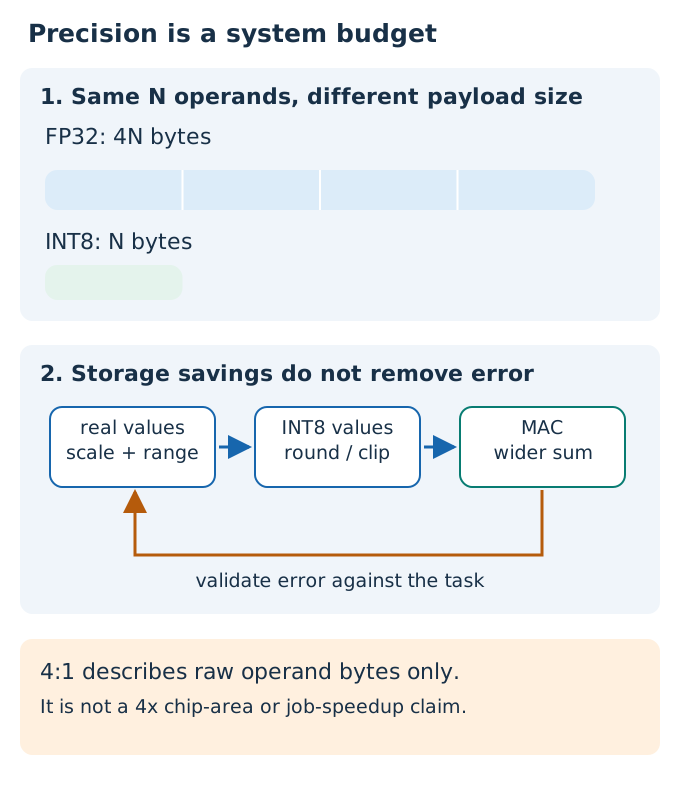
圖:作者設計的數值預算示意;4:1 只指原始 operand bytes,未含 metadata,不代表晶片面積或工作速度同比改善。概念依據:Jouppi,ISCA 2017、Google TPU v1 deep dive。
Inference 為什麼有資格使用較低 precision
Training 與 inference 對數值的需求並不相同。
Training 必須更新 weight,gradient 可能跨很大的 dynamic range,微小差異還會在很多 step 中累積。Inference 的 weight 已經固定,硬體要做的是把既有模型映射成大量 dot product。只要模型對小幅數值誤差具有足夠容忍度,就沒有理由每一個 operand 都維持 training 時的 floating-point precision。
第一代 TPU 論文把這件事描述得很直接:quantization 將 floating-point number 轉成 narrow integer,而 8-bit 在許多 inference workload 上已經足夠。Google Research
後來 Google 團隊在 CVPR 2018 更完整描述 integer-only inference 的 quantization scheme。常見的 affine mapping 可寫成:
r = S × (q − Z)
其中 r 是 real value,q 是量化後 integer,S 是 scale,Z 是 zero-point。模型不是把小數點直接砍掉,而是先決定一段 real-value range,再把它映射到有限的 integer code。8-bit 只有 256 個 code,因此一定會產生 rounding;超出 representable range 的值還會被 clipping。Jacob et al., CVPR 2018
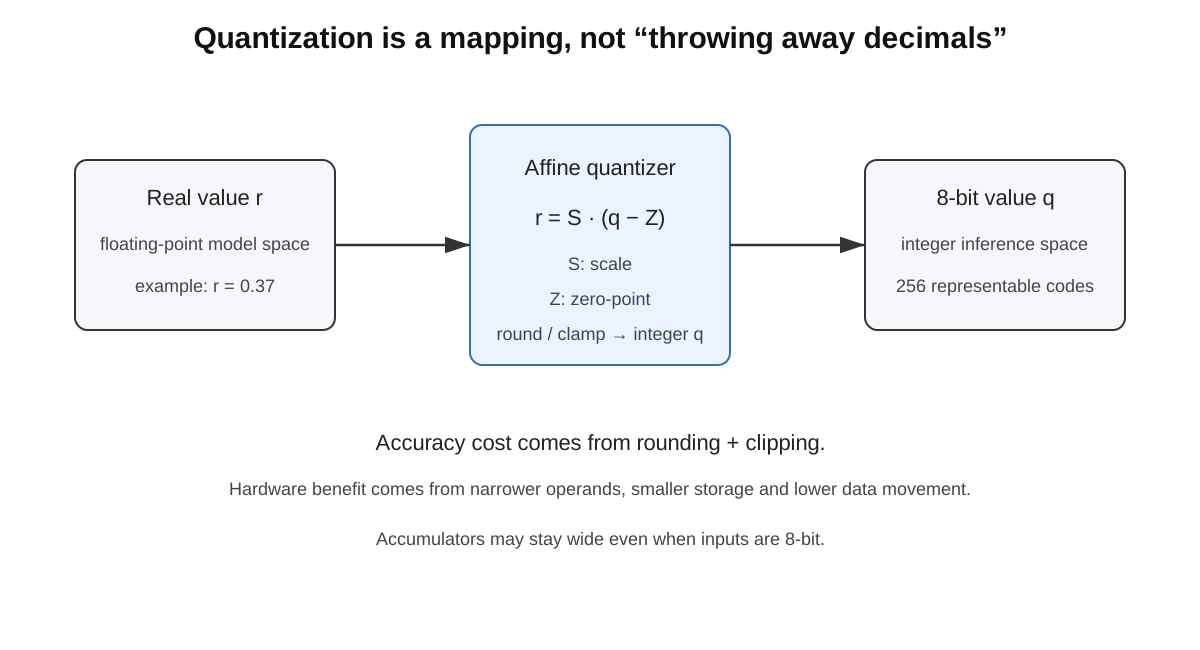
這裡的 trade-off 很清楚:precision 降低後,hardware efficiency 上升;但 model accuracy 可能因 rounding、clipping、outlier 而下降。Quantization-aware training 的價值,就是在 training 時先模擬這些誤差,讓模型學會適應 integer representation。CVPR 2018 的工作顯示,weights 與 activations 同時量化成 8-bit 時,模型 memory footprint 相較 32-bit floating point 可接近縮小四倍,並能在其測試模型上維持接近浮點版本的 accuracy。Jacob et al., CVPR 2018
這是 general quantization mechanism;不能倒推成 TPU v1 使用完全相同的 TensorFlow Lite quantizer。可以確定的是,TPU v1 的主要 Matrix Multiply Unit 以 8-bit integer operand 為設計中心。
Quantization 真正犧牲的是解析度,不只是有效位數
假設某層 activation 的有效範圍是 -1 到 1,若用對稱 INT8 表示,可以粗略把 scale 想成 1/127。real value 0.37 會被映射到最接近的 integer code,大約是 47;還原後約為 47/127 = 0.3701。單次誤差很小。
問題在於 range 不會永遠這麼漂亮。若同一層偶爾出現 magnitude 20 的 outlier,而 quantizer 又必須讓 20 落在 representable range 內,scale 會被迫放大。原本密集落在 -1 到 1 的多數 activation,就只剩很少的 integer code 可用。這時候即使沒有 clipping,rounding noise 也會急遽增加。
反過來,如果 quantizer 把 range 收窄到多數資料所在區域,resolution 會更好,但 outlier 會飽和在最大/最小 code。這就是 clipping error。
所以 8-bit 是否「夠用」不是單純看 bit 數,而是看 tensor distribution、scale 的選擇、不同 channel 的 range,以及模型對誤差的敏感度。後來 per-channel quantization 會重要,就是因為同一個 layer 裡不同 output channel 的 weight distribution 可能差很多;共用一個 scale 往往讓少數 outlier 決定整個 tensor 的 resolution。
這也說明硬體與模型之間真正的契約:硬體提供低精度 arithmetic 的效率,compiler / quantizer 必須把 tensor 映射到那個數值空間,模型則要在這個誤差模型下仍然維持可接受 accuracy。缺任何一層,8-bit MAC 都只是一個便宜但不好用的乘法器。
8-bit 讓同樣 die budget 容納更多 arithmetic
TPU v1 採 28 nm、700 MHz。Matrix Multiply Unit 裡有:
256 × 256 = 65,536
個 8-bit MAC。
每 cycle,每個 MAC 做一個 multiply 與一個 add;把兩者各算一個 operation:
65,536 × 700M × 2 ≈ 91.75 TOPS
也就是論文報告的約 92 TOPS。
如果 multiplier 本身是整顆 chip 最昂貴的元件之一,那 precision 下降就等價於釋放 transistor budget。Google Cloud 當年的技術文章把這件事說得更直白:TPU 使用 65,536 個 8-bit integer multiplier,而當時常見 GPU 只有數千個 32-bit floating-point multiplier;只要 application accuracy 允許 8-bit,硬體便有機會塞進數十倍更多 multiplier。Google Cloud TPU deep dive
| Arithmetic | TPU v1 論文引用的相對 circuit cost | 架構含義 |
|---|---|---|
| INT8 multiply vs FP16 multiply | 約 1/6 energy、1/6 area | 相同面積/功耗預算能配置更多乘法器 |
| INT8 add vs FP16 add | 約 1/13 energy、1/38 area | accumulator 周邊 arithmetic 更容易壓低成本 |
| INT8 weight vs FP32 weight | raw storage 為 1/4 | weight memory 與傳輸 byte 數同步下降 |
表 1|前兩列為 TPU v1 論文引用的 circuit-cost 估計;第三列是位元寬的直接算術結果,與 Jacob et al. 報告的近 4× model-memory reduction 一致。來源:Jouppi et al., ISCA 2017、Jacob et al., CVPR 2018。
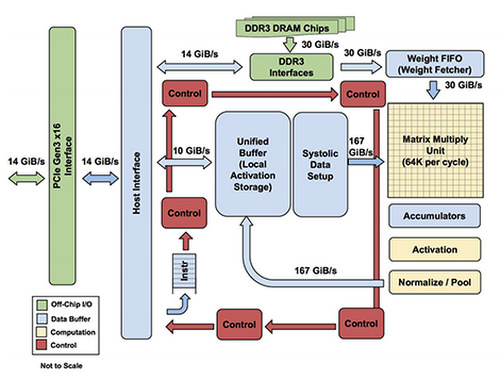
值得注意的是,TPU floorplan 也反映這個取捨:Matrix Multiply Unit 只佔約四分之一 die,但已經容納 65K MAC;大量面積反而留給 Unified Buffer 與其他 data-storage structure。當 arithmetic 被低精度做便宜之後,memory 會開始變成下一個最昂貴的資源。
為什麼 bit-width 會這麼直接地變成面積與功耗
從電路角度看,N-bit integer multiplier 要處理 N×N 個 partial-product 關係,再透過 reduction tree 與 final adder 合併。實際 cell library、Booth encoding、pipeline depth 與 timing target 會改變精確 scaling,因此不能把「bit 數減半」機械地等同「面積變四分之一」。但方向很清楚:operand 越寬,需要參與切換的邏輯、wire 與 register 越多。
Floating point 還多了 exponent、mantissa normalization、rounding、exception handling 等資料路徑。TPU v1 選擇 inference-only 的 8-bit integer datapath,等於把這些通用 floating-point 成本從最熱的 matrix multiply path 移除。
更重要的是,這不是只省單顆 MAC 的 power。65,536 個 MAC 每個 cycle 同時切換時,任何每-operation energy 的差異都會被放大 65K 倍;而面積節省也會反過來讓 wire 更短、array 更緊密,進一步降低資料移動成本。domain-specific accelerator 的優勢常常就是這種乘數效應:一個局部簡化同時作用在數萬個平行單元上。
因此「INT8 比 FP16 少 8 bits」這種描述太表面。真正改變的是整顆晶片在固定 power envelope 內能承受多少 active arithmetic density。
8-bit 也把同一條 memory bus 變得更有用
假設一個 model 有 100M weights。
只看 raw representation:
| Representation | 100M weights 所需空間 |
|---|---|
| FP32 | 約 400 MB |
| FP16 | 約 200 MB |
| INT8 | 約 100 MB |
表 2|單純依位元寬計算,不含 metadata、alignment、compression 或 padding。INT8 相對 FP32 減少四分之三的 raw bytes。
這件事對 accelerator 特別重要,因為一個 MAC 再便宜,如果每次計算都必須等 off-chip DRAM,compute density 並不會自動變成 application throughput。
TPU v1 的 Weight Memory 是 8 GiB DDR3,透過 Weight FIFO 把 weight 餵進 Matrix Multiply Unit;Unified Buffer 則保存 activation。當 weight 從 32-bit 降到 8-bit,同樣的 physical bandwidth 理論上能搬四倍數量的 weight element。這等於在沒有改 DRAM channel 的情況下,把「每秒能供應多少 operand」提高。
但這個收益沒有把 memory wall 消失。
Google 的實測顯示,六個 representative workload 裡有四個仍受 memory bandwidth 限制;論文甚至估算,把 TPU 的 DDR3 memory system 換成當時 K80 等級的 GDDR5,achieved TOPS 可以接近三倍。Jouppi et al., ISCA 2017
這很能說明 accelerator 演化的規律:當 precision 讓 compute 變便宜,瓶頸就往 memory 移。
用 100M weights 算一次:低 precision 同時改變容量與等待時間
TPU v1 論文的六個 production workload 裡,最大模型約有 100M weights。若只做 raw-size 算例,FP32 需要約 400 MB、FP16 約 200 MB、INT8 約 100 MB。
第一代 TPU 的 Weight Memory 頻寬約為 30 GiB/s。若極度簡化地假設整個 100 MB weight set 必須從 DRAM 順序搬一次,而且忽略 protocol、burst efficiency、bank conflict 與重用,理論傳輸時間大約是:
FP32:400 MB / 30 GiB/s ≈ 12–13 ms
INT8:100 MB / 30 GiB/s ≈ 3–4 ms
這不是 TPU workload 的實測 latency,因為真實 execution 會 tile、reuse、pipeline,並把 weight transfer 和 compute 重疊;不同 model 的 reuse 也完全不同。但這個算例揭露一件很重要的事:precision reduction 不只把 model「裝得下」,還直接縮短同一條 memory channel 上每份 tensor 的服務時間。
當系統進入 bandwidth-bound 區域,這種 byte reduction 往往比增加更多 MAC 更有價值。反過來,如果 workload 的 arithmetic intensity 很高,同一份 weight 被重用上千次,weight bandwidth 的影響就會降低,compute array utilization 才重新成為主要問題。
這正是 roofline model 後面會出現的理由:需要把 operations 與 bytes 放在同一個模型裡,才能知道下一顆 transistor 應該花在 MAC、SRAM 還是 memory interface。
Precision 在 TPU v1 上直接等於 throughput
TPU v1 的 Matrix Unit 可以接受不同 precision 組合,但 speed 不一樣。
論文明確寫道:8-bit weight × 8-bit activation 時是 full speed;若一邊是 8-bit、一邊是 16-bit,Matrix Unit 只有 half speed;兩邊都是 16-bit 時只剩 quarter speed。Jouppi et al., ISCA 2017
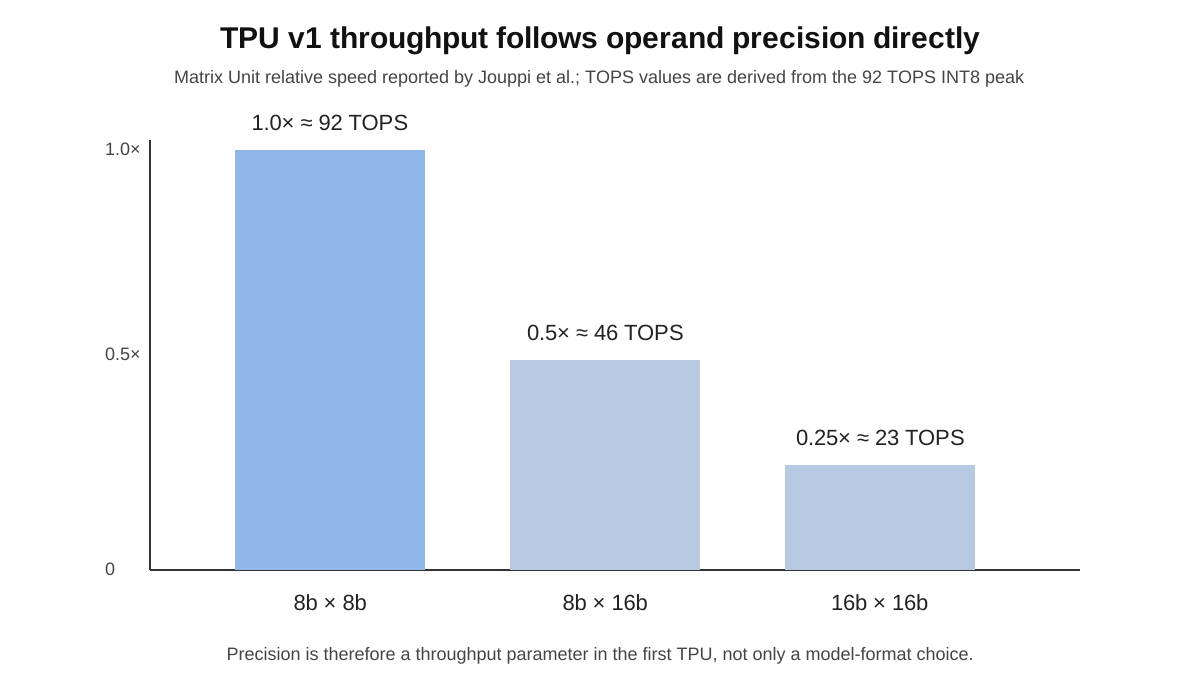
所以 precision 在 TPU v1 上不是 software format 選項,而是 hardware throughput parameter。當 operand width 加倍,固定 datapath 與 MAC array 可以同時處理的 element 數下降,整個 accelerator 的 peak arithmetic rate 跟著掉。
這也解釋了為什麼「同一個 model 量化成 INT8」可能同時得到三種收益:每個 arithmetic unit 變小、變省電;相同 die area 可以放更多 parallel MAC;相同 SRAM/DRAM bandwidth 可以搬更多 element。
這三件事同時發生,才會形成 ASIC 級的效率差,而不是單純把 model file 壓縮四倍。
Accumulator 不能跟著一路縮成 8-bit
若所有 data path 都縮成 8-bit,dot product 很快就會 overflow。
拿一個 256-element signed INT8 dot product 做最簡單的 worst-case estimate:
127 × 127 × 256 = 4,129,024
2²² = 4,194,304,所以光 magnitude 就接近 22 bits;再考慮 sign、跨 tile accumulation 與實際 network layer 的範圍,8-bit accumulator 顯然不夠。
TPU v1 因此用 8-bit operand 做 multiply,但 16-bit product 會送進 32-bit Accumulator。論文描述的是 4 MiB accumulator memory,內含 4096 組、每組 256 個 32-bit accumulator。Jouppi et al., ISCA 2017
這是 low-precision accelerator 很重要的一個設計原則:輸入 precision 可以很低,但 reduction path 往往需要更高 precision。
把所有資料都壓成最窄位元,不代表整體效率最高。若 accumulator 太窄,需要頻繁 rescale、saturate,甚至造成 accuracy loss,省下來的面積可能在其他地方付回去。
Low precision 的 failure mode 往往發生在 reduction,不是在 multiply
假設單一 product 都能精確放進 16 bits,也不代表幾百、幾千個 product 相加後仍能安全。dot product 本質上是 reduction;誤差與 dynamic range 都會沿著 reduction tree 累積。
這也是為什麼硬體常採用「窄 input、寬 accumulator」:把大量最頻繁的 multiply 做便宜,同時在相對少數的 accumulation state 上付出較高 bit-width 成本。這是一個比「所有地方都 INT8」更好的 area/accuracy trade-off。
對 compiler 而言,這還會產生 requantization boundary。某一層的 32-bit accumulated result,送進下一層 8-bit activation 前,必須重新套用 scale、rounding 與 saturation。若 scale 選錯,問題不是 arithmetic throughput 下降,而是整層輸出 distribution 被扭曲。
因此 quantized accelerator 的 correctness 不能只驗證「integer kernel 算對」。至少還要驗證三個邊界:輸入 tensor 的 quantization parameter 是否匹配、accumulator 是否可能 overflow、輸出 requantization 是否維持模型允許的 error budget。
這種數值 contract 後來會一路延伸到 compiler IR:tensor 不只需要 shape 與 dtype,還需要 scale、zero-point、per-tensor/per-channel 等 quantization metadata。硬體越專用,software stack 就越需要精確描述這些語意。
Quantization 的成本最後會回到模型與 compiler
硬體端希望 bit 越少越好;模型端則希望數值誤差越少越好。兩者不會自然一致。
如果一層 activation 大多落在 [-1, 1],但偶爾出現 20 的 outlier,要保留 20,就必須把 scale 放大,讓 [-1, 1] 的大多數值只用到很少幾個 integer code;如果把 range 縮小,outlier 又會被 clipping。
因此 quantization 最終會變成一個 cross-layer problem:
model distribution → quantizer / training → compiler representation → integer kernel → MAC / accumulator → memory traffic
這也是後來 per-channel quantization、quantization-aware training、mixed precision 會變得重要的原因。它們都在處理同一個 trade-off:哪一些 tensor 可以降 precision,哪一些需要保留更多 dynamic range。
對 TPU v1 而言,Google 先抓住了 inference workload 最有價值的一個區域:大量 weight/activation 可以用 8-bit,而 accumulator 保留 32-bit。這個選擇讓晶片能以很小的 control overhead 建立極高 MAC density。
INT8 解掉 arithmetic cost,下一堵牆就是 memory
回頭看第一代 TPU,可以把設計因果鏈濃縮成:
Inference accuracy tolerance
→ 8-bit quantization
→ smaller / lower-energy arithmetic
→ 65,536 MAC systolic array
→ 92 TOPS compute density
→ memory bandwidth becomes dominant
這條鏈比「INT8 比 FP32 快四倍」更精確。位元寬下降不只改變 arithmetic count,而是重新分配整顆晶片的 area、power 與 bandwidth budget。
也正因如此,下一篇不能只繼續看 MAC。
當 65K 個 MAC 已經便宜到可以同時工作,真正困難的問題變成:24 MiB Unified Buffer、4 MiB Accumulator、Weight FIFO 與 8 GiB DDR3 要怎麼讓資料供應跟得上?
那就是 TPU v1 memory hierarchy 的設計起點。
References
- Norman P. Jouppi et al., “In-Datacenter Performance Analysis of a Tensor Processing Unit,” ISCA 2017.
- Google Research — In-Datacenter Performance Analysis of a Tensor Processing Unit.
- Benoit Jacob et al., “Quantization and Training of Neural Networks for Efficient Integer-Arithmetic-Only Inference,” CVPR 2018.
- Google Cloud — An in-depth look at Google’s first Tensor Processing Unit (TPU), May 12, 2017.