
BTTF 把 waveform 轉成 SQL,讓 Agent 進入 post-simulation debug
重點
- BTTF
- BTTF 把 VCD 的 signal metadata 與時間變化拆成關聯資料,讓模型以 schema-aware SQL 查詢大型模擬結果;150 題整體 execution accuracy 為 95.33%,顯示 post-simulation debug 可以從 GUI 人工瀏覽轉成工具化查詢。
- 晶片驗證團隊
- 晶片驗證團隊若先把 waveform、coverage、log 與 RTL version 做成可定位的資料介面,Agent 就不必把大量 dump 塞進 context;代價是 ingestion、索引、scope 正規化與資料保留策略成為新的平台工作。
- EDA 平台團隊
- EDA 平台團隊可以把模型與 simulator 之間的介面從文字 log 擴成 query service,讓既有 deterministic engine 繼續產生結果、Agent 負責查詢與關聯;這比替每套 GUI 錄製操作軌跡更容易量測正確率與延遲。
- EDA 工具供應商
- EDA 工具供應商若提供穩定的 waveform、coverage 與 source mapping API,會直接降低 Agent 整合成本;若資料仍鎖在 proprietary viewer 與檔案格式,模型再強也會把大量時間耗在資料轉譯與定位。
大型模擬失敗後,工程師會打開 waveform、沿 hierarchy 找訊號、定位 assertion 失敗時間,再回到對應的 RTL;重新寫 RTL 通常發生在問題已經被定位之後。這段工作很適合人用 GUI 探索,卻不適合直接把原始 dump 丟給 LLM:一個 SoC block 的 VCD 可以超過數 GB,時間序列又需要精確的 scope、timestamp 與 value semantics。
10 月 5 日公開的 Back to the Future(BTTF)提出另一種做法:先把 waveform 轉成關聯資料,再讓 Agent 操作資料庫。論文處理的 4.2 GB VCD 含 18,450 個 nets,將訊號宣告與時間變化拆成兩張主要 table;上層 Agent 以自然語言規劃,再產生 schema-aware SQL、執行 assertion 檢查,並把異常訊號連回版本化 RTL。
這和本系列先前討論的 可驗證 IC 設計狀態接上了一個缺口:設計狀態即使有版本,若大量動態結果仍只能靠人打開 viewer 搜尋,Agent 仍無法有效使用它。BTTF 的新意是把 post-simulation artifact 變成低延遲、可組合的查詢介面。
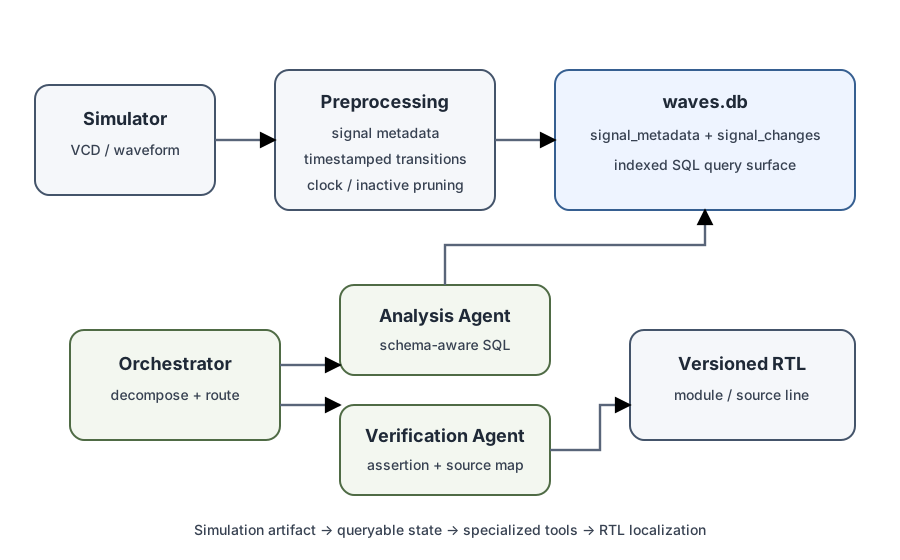
Waveform 先變成資料庫,context 問題才變成 query 問題
BTTF 的第一層不是 LLM,而是資料轉換。它把 signal declaration 放進 signal_metadata,把每次 value transition 以 timestamp 與 foreign key 寫入 signal_changes。Agent 查「某訊號第一次變成 42 的時間」時,不需要讀完整 VCD,只需要產生對應的 filter 與排序查詢。
這個選擇把成本從 token 移到 ingestion 與 index。論文的 fully unpruned database 為 1,420 MB,平均 query latency 410.5 ms;移除 clock transition 後縮到 480 MB,latency 降到 125.2 ms,保留 98.51% functional toggle coverage。再移除 zero-toggle signals,資料量降到 395 MB、latency 94.8 ms,論文報告 active-net coverage 仍為 100%。更激進的 below-average pruning 雖縮到 185 MB、41.6 ms,coverage 只剩 64.23%。BTTF Table 1
這組數字指出平台上的實際取捨:資料壓縮不能只看 storage ratio。若 pruning 移除了 root-cause 需要的低活動訊號,Agent 查得再快也沒有用。較合理的第一步是移除高頻 clock transition 與完全沒有切換的訊號,再依 debug workload 決定是否需要更積極的摘要。
Ingestion 本身也有工程成本。論文以 batched insertion 取代逐 row 寫入,最高得到 2.89× database generation speedup。對大型 regression farm 而言,這表示 waveform-to-queryable-store 應視為 simulation pipeline 的正式 stage,而不是 debug 發生後才臨時轉檔。
多 Agent 的收益來自工具分工,也付出近兩倍 latency
BTTF 把工作拆成 Orchestration、Analysis、Verification 與 Evaluation。Analysis Agent 專注 schema 與 SQL;Verification Agent 執行 ASSERT、ASSERT_STATIC、ASSERT_NEVER、ASSERT_KNOWN、COVER 等規則並關聯 source;Evaluation Agent 再檢查 query 是否符合 schema、時間條件與 scope。
150 個 expert-annotated queries 的整體 execution accuracy 為 95.33%。其中 scope/net discovery、value change count、event timing check 都報告 100%;RTL attribution 為 87.5%,static SVA check 為 84.62%,dynamic SVA check 為 90.91%。這些差距很重要:資料查詢已相當穩定,跨 waveform 到 source 或 assertion semantics 的任務仍較難。BTTF benchmark
論文也比較單一 Agent 與多 Agent。多 Agent 在五項 autorater 指標上的 reasoning quality 高 17.3%,但平均 latency 是 1.96×。因此平台不需要把每個查詢都送進完整協作流程。單一訊號 value lookup 可以走直接工具;需要跨 scope、source 與 assertion 的多步 root-cause 才值得付出 orchestration latency。
這也修正了「Agent 越多越可靠」的直覺。分工有價值的前提,是每個角色握有不同且明確的工具能力;若只是把同一份 context 在多個模型間轉述,成本會增加,資料品質卻沒有改善。
從 VerilogCoder 到 BTTF,介面正在從程式結構延伸到執行狀態
2025 年的 VerilogCoder已經讓 coding agent 透過 AST-based waveform tracing 處理硬體設計問題。BTTF 往前推了一步:它不只讓 Agent 看程式結構,而是把大量 temporal state 轉成一般資料系統熟悉的 relational query。
這個演進對 IC 設計平台的含義,比「又多一個 verification agent」更大。既有 EDA flow 已經有 simulator、waveform database、coverage database、log 與 source control;Agent 平台需要補的是穩定的 machine interface,讓這些 artifact 能被查詢、交叉定位與量測。
可行的導入順序是先做 read-only debug path。固定一批 regression failures,保留 engineer golden answers,量測 scope discovery、timestamp lookup、RTL attribution 與 assertion diagnosis 的正確率、P50/P95 latency、資料轉換時間與 storage overhead。等 read path 穩定,再決定是否讓 Agent 產生新的 assertion、test stimulus 或 RTL patch。這樣能把「會查」和「會改」分成兩個可獨立評估的能力。
未來 12 個月若這條路線成立,最值得觀察的訊號不是更大的 LLM,而是 EDA vendor 與內部 CAD 平台是否開始提供穩定的 waveform/coverage query API、source mapping,以及能跨 regression run 比較的 schema。若每套 simulator 仍需獨立解析 proprietary dump,BTTF 的方法仍有研究價值,但導入成本會停留在資料轉譯層。
週三相對週二的新增變化
本週既有 Agentic Design 主線已涵蓋模型操作 EDA 工具、design state 與跨工具流程。BTTF 新增的是另一個方向:Agent 不只需要 action surface,也需要為大型執行結果設計 query surface。
這會改變平台優先順序。對 post-simulation verification,先建立可查詢的 artifact layer,可能比先做 GUI agent 或增加模型 context 更有效。BTTF 的結果已顯示資料表示方式能把 4.2 GB waveform 轉成百毫秒級查詢;下一步要驗證的是相同方法能否跨 simulator、coverage database 與更長 regression window 保持準確。
證據範圍
BTTF 是 2026 年 10 月 5 日公開的研究論文,benchmark 使用 Gemini 2.5 Pro、4.2 GB VCD、18,450 nets 與 150 個人工標註 query;95.33% 是該資料集的 execution accuracy。論文沒有提供商用 full-chip regression 的 production deployment,也沒有證明 SQLite 是所有 waveform 規模的最佳 storage engine。
文中的 read-only 導入順序、direct-query fast path 與跨 artifact query layer 是依論文結果提出的工程推論。若後續在不同 simulator、proprietary waveform、數十到數百 GB window 或多使用者環境中,ingestion 成本、source mapping error 或 query latency 明顯惡化,就需要改用 columnar/time-series storage、分散式索引或 vendor-native API,而不能直接沿用目前配置。
References
- Je Yang, Ivan Lobov, Thomas Karpati, Back to the Future: Rethinking EDA Infrastructure for Agentic Systems in Chip Design Verification, 2026-10-05.
- BTTF HTML full text, framework、preprocessing 與 benchmark tables.
- Chi Ho, Haoxing Ren, Brucek Khailany, VerilogCoder: Autonomous Verilog Coding Agents with Graph-based Planning and AST-based Waveform Tracing Tool, AAAI 2025.